Next-Generation Solar Cells
RESTART supports research into advanced photovoltaic technologies that have the potential to accelerate Africa’s transition towards clean, reliable, and affordable energy. By focusing on the development and optimisation of innovative solar technologies, the initiative aims to improve photovoltaic efficiency, durability, scalability, and cost-effectiveness under Africa’s diverse environmental and climatic conditions. Such research can contribute to addressing the continent’s growing energy demand while reducing dependence on fossil fuels and supporting the expansion of decentralised renewable energy systems. Ultimately, RESTART seeks to translate scientific and technological advances into practical solutions that can enhance energy access, strengthen energy security, reduce environmental impacts, and promote sustainable socio-economic development across Africa.
Why Solar Energy?

Africa possesses some of the world’s most favourable solar resources. Harnessing this resource effectively could help address energy poverty, improve energy security and support sustainable development.

Abundant Resource
Africa receives high levels of solar irradiation throughout the year, with many regions experiencing more than 2,000 hours of sunshine annually. This natural advantage makes solar energy a reliable and cost-effective source of clean power.
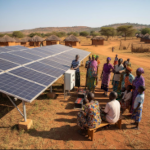
Tackling Energy Poverty
Solar energy can bring electricity to remote and under-served communities, powering homes, schools, health centres and small businesses. It expands access to clean, affordable and reliable energy, improving lives and creating opportunities.
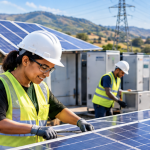
Stronger Energy Security
By diversifying the energy mix and reducing dependence on imported fuels, solar energy builds resilience, stabilises energy costs and strengthens national economies. It also helps countries prepare for future energy demands and climate-related risks.
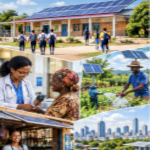
Sustainable Development
Solar energy supports climate action by cutting carbon emissions and reducing environmental impact. It drives green jobs, spurs innovation and contributes to long-term economic and social growth across the continent.
Solar energy is not just a clean energy solution – it is a pathway to a brighter, more prosperous and sustainable Africa.
Solar Energy Materials
The transition to sustainable energy depends not only on how we generate electricity, but also on the materials used to capture, convert, store and manage energy. Advances in materials science are therefore central to developing photovoltaic technologies that are more efficient, durable, affordable and environmentally sustainable.
RESTART researchers investigate the fundamental properties of materials used in solar-energy technologies, with particular emphasis on understanding the relationship between material composition, structure, defects, interfaces and device performance.
Advanced materials characterisation techniques are used to understand how materials evolve during processing and operation. This knowledge helps researchers identify the mechanisms that control energy conversion, degradation and stability, providing a foundation for the rational design of improved solar-energy materials.
Perovskite Solar Cells
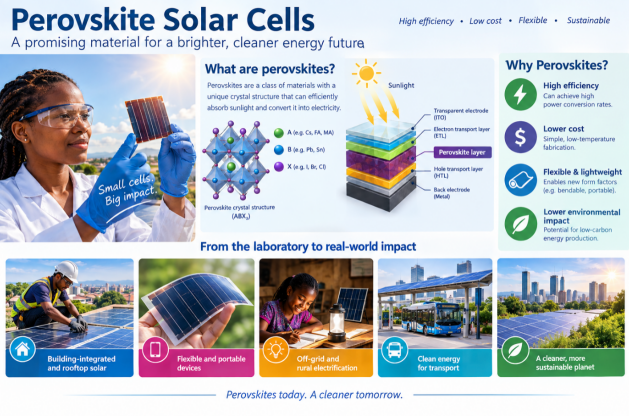
Perovskite solar cells are among the most promising emerging photovoltaic technologies, offering a potential pathway towards high-performance, low-cost and lightweight solar energy systems. Their remarkable optoelectronic properties and versatility in material composition enable efficient conversion of sunlight into electricity, while their solution-processable nature opens opportunities for manufacturing approaches that can be less energy-intensive than conventional photovoltaic technologies.
Perovskite materials can also be deposited on a wide range of substrates and integrated into thin, lightweight and flexible devices. This versatility creates opportunities for applications beyond conventional rooftop and utility-scale photovoltaics, including lightweight modules, building-integrated solar technologies and tandem solar cells, where perovskites can be combined with established silicon technologies to improve overall energy conversion efficiency.
Despite their rapid progress, important scientific and engineering challenges must be addressed before perovskite photovoltaics can achieve widespread commercial deployment. Long-term stability, manufacturing reproducibility, environmental sustainability and a deeper understanding of material defects remain critical areas of research.
Research within RESTART
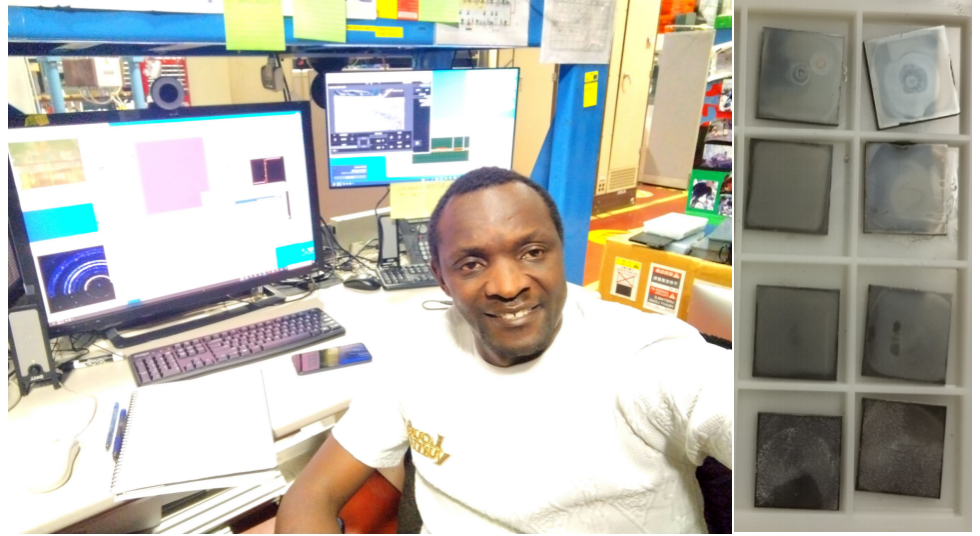
Researchers within RESTART are working to address these challenges through materials research, advanced characterisation and device development. Our research focuses on:
Device stability and lifetime
Understanding how perovskite solar cells degrade under heat, light, moisture and electrical stress is essential for developing devices that can operate reliably over extended periods. We investigate degradation mechanisms and strategies for improving the operational lifetime of perovskite devices.
Reproducibility of fabrication
Achieving consistently high-performing devices requires precise control of material composition, film formation and processing conditions. RESTART researchers investigate fabrication processes and the factors that influence film quality, device performance and batch-to-batch reproducibility.
Defect formation and transport properties
Defects and imperfections within perovskite materials can influence charge transport, recombination and long-term stability. By studying how defects form and how charge carriers move through the material, researchers can develop strategies to minimise performance losses and improve device efficiency.
performance and batch-to-batch reproducibility.
Sustainable and lead-reduced alternatives
While lead-based perovskites currently offer some of the strongest photovoltaic performance, their environmental implications must be carefully considered. RESTART researchers are exploring more sustainable material systems and approaches to reducing or replacing lead while maintaining desirable optoelectronic properties.
The goal is not simply to achieve higher laboratory efficiencies, but to develop photovoltaic technologies that are stable, reproducible, scalable and environmentally responsible. By bringing together materials science, device physics, advanced characterisation and sustainable technology development, RESTART aims to contribute to the next generation of affordable and reliable solar technologies for Africa and beyond.
Organic Solar Cells
Flexible. Lightweight. Printable.
Organic solar cells are an emerging photovoltaic technology with the potential to transform how and where solar energy can be generated. Unlike conventional rigid solar panels, organic photovoltaics use carbon-based semiconductor materials that can be processed into thin, lightweight and flexible solar devices.
Their unique properties open possibilities for solar technologies that can be integrated into surfaces and applications where conventional panels may not be practical – from flexible electronics and portable power to building-integrated and lightweight solar systems.
What we are exploring
At RESTART, we investigate the materials, structures and processes that determine the performance and stability of organic solar cells.
Advanced materials
Developing and understanding organic semiconductor materials with improved light absorption and charge-transport properties.
Charge generation & transport
Understanding how light is converted into electrical charge and how charge carriers move through the device.
Thin-film morphology
Investigating how molecular organization and film structure influence solar-cell performance.
Stability & degradation
Understanding how light, heat, oxygen and moisture affect device performance and lifetime.
Sustainable fabrication
Exploring scalable, low-cost and environmentally responsible approaches to manufacturing organic photovoltaic devices.
Power where conventional solar cannot
The flexibility and low weight of organic solar cells could enable new forms of solar power —from portable and wearable electronics to lightweight structures and unconventional surfaces.
RESTART research seeks to advance these technologies from promising laboratory materials towards stable, scalable and sustainable photovoltaic solutions for the future.
The Role of Synchrotrons
Seeing What Happens Inside a Solar Cell
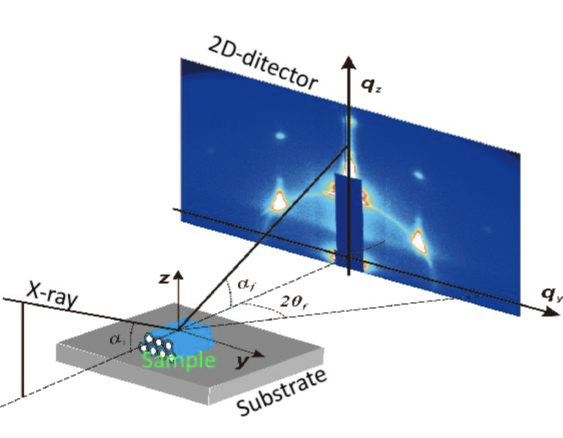
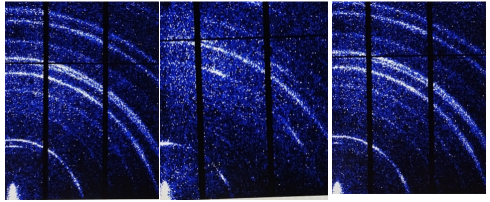
A solar cell may look simple from the outside, but a lot is happening inside it. Tiny changes in its materials can determine how much electricity it produces, how long it lasts and why its performance may decrease over time. Synchrotrons help us see these changes.
A synchrotron is a large scientific facility that produces extremely bright X-rays. These powerful X-rays allow researchers to look deep inside materials and study their structure in much greater detail than is possible with many conventional laboratory techniques.
Understanding How Solar Cells Work
At RESTART, synchrotron techniques help us understand what happens to solar-cell materials as they are made and used.
What can we study:
How materials form
We can watch how the different parts of a solar-cell material come together and change during fabrication.
How materials affect performance
By studying the structure of materials, we can better understand how efficiently they generate and transport electrical charges.
What happens at interfaces
Solar cells are made from several layers. Synchrotron measurements help us understand how these layers interact and how those interactions affect performance.
Why solar cells degrade
We can investigate how heat, light, moisture and other conditions change the materials and reduce their performance.
How to make better solar cells
The knowledge gained from these studies helps researchers design materials and devices that are more efficient, stable and reliable.
From the Laboratory to the Real World
One of the most powerful advantages of synchrotron research is that we can study materials while they are changing. Instead of looking only at the finished solar cell, researchers can follow what happens during fabrication or operation.
This helps answer important questions:
What is happening?
Why is it happening?
How can we improve it?
Why This Matters
Better understanding leads to better solar technology. By combining synchrotron research with laboratory experiments and device development, RESTART is working to turn scientific knowledge into more efficient, longer-lasting and more sustainable solar cells.
Our work also creates opportunities for African researchers and students to access advanced scientific facilities, develop new skills and contribute to the global development of clean-energy technologies.
Discover What We Can See
RESTART uses advanced research and international collaboration to explore the materials that will shape the future of solar energy.
Want to learn more, collaborate with us, or support the next generation of African solar-energy researchers?